Should You Ignore Customers Before You Open? | Vance Morris
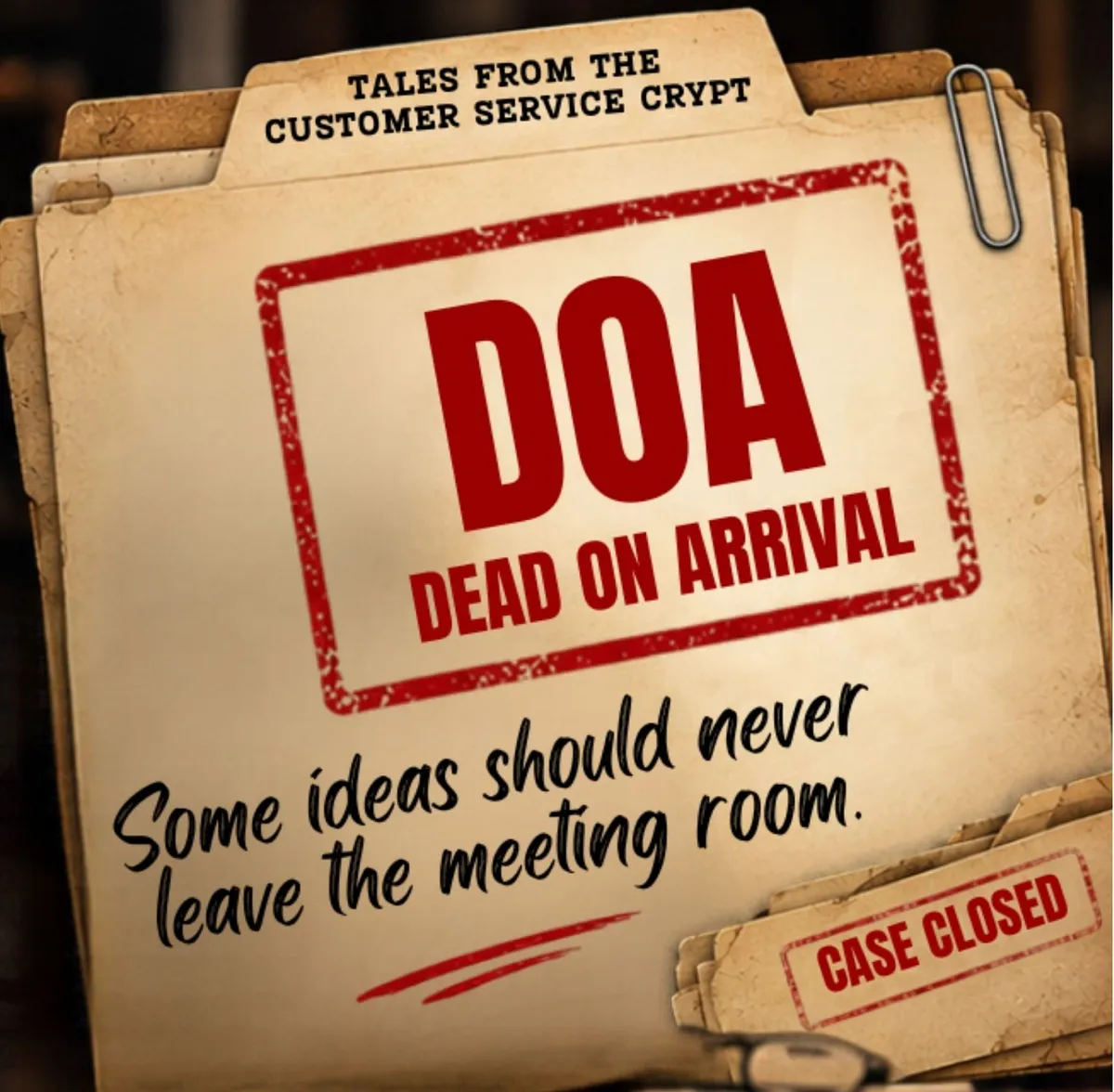
DOA: 943,000 People Cheered a Barista for Ignoring Her Customer
One-sentence summary: A viral barista who ignored an early customer's knocks and calls shows how businesses lose loyal customers when acknowledgment depends on an employee's mood instead of a written service standard.
It's 4:34 in the morning. The bar lights are on, the lobby lights are off, and a woman is standing at the front door of a café with her arms crossed, staring inside.
She pulls the handle. Locked. She calls the store. The phone rings. And rings.
Inside, the barista keeps working and treats the woman like a parking meter.
Twenty-six minutes later, the café opens. Sometime after that, the barista posts the story on TikTok, and 943,000 people watch it. The comment section gives her a standing ovation.
Pull up a chair. This week's body came in cold, and the crowd in the comments is applauding the cause of death.
Quick Answer: How Should a Business Handle Customers Who Show Up or Call Before It Opens?
Acknowledge them within seconds, every time. You don't have to unlock the door, take an order, or open early. You do have to let the person know a human being sees them. A wave through the glass works. So does cracking the door to say when you'll be ready, or offering a seat if your setup makes that safe. Answer the phone, or route it to a message that gives a specific time. Then put the whole thing in writing as a service standard so the response doesn't depend on who opened that morning or how much sleep they got. Ignoring people buys you a few minutes of prep. It costs you the relationship, and you'll never see the bill, because the customer simply stops coming back.
Key Takeaway
Being closed is a fact customers can live with. Being ignored is a feeling, and customers keep score with feelings.
Executive Summary
A Bay Area barista known on TikTok as @jorlala described ignoring a customer who rattled the locked door and called repeatedly 26 minutes before the café's 5 a.m. opening. The video passed 943,000 views, and most commenters, many of them baristas, backed her. The customer was impatient. The barista had real work to do. Neither fact changes what the customer walked away with: proof that the business would watch her stand there and do nothing. This is a Service Standards failure, one of the seven magic keys I wrote about in my book Systematic Magic. Disney ranks Courtesy above Efficiency for a reason. Attorneys, CPAs, financial advisors, and home service companies commit the same sin every day through unanswered phones, slow callbacks to existing clients, and voicemail boxes that work exactly like locked doors. Before she bought a single cup, the café had already taught her the terms of being its customer. The fix is a written standard for acknowledgment that still holds up at 4:34 a.m., and zero tolerance for employees who treat customers as an interruption to their job.
Quick Facts
Creator: TikTok's @jorlala, a barista named Jordan
Views: 943,000+; comments: 2,669 (per the Daily Dot)
Opening crew arrival: about 4:30 a.m.
Café opening: 5 a.m.
Customer at the door: about 4:34 a.m.
Customer behavior: stared in, pulled the locked door, called the store repeatedly
Business response: no acknowledgment at the door, phone not answered
Comment section: largely supportive of the barista
Verification: the Daily Dot noted it couldn't independently verify the account
Magic Key: Service Standards
Key Data
943,000+ views and 2,669 comments on the video. External: Daily Dot.
26 minutes remaining before opening when the customer was turned away. External: Daily Dot, from the creator's account.
18% live answer rate across 4,000 business calls; 7% voicemail callback rate. Proprietary: DSNI 4,000-call study.
New prospects answered in under 60 minutes; clients of 12 months wait 7.3 hours. Proprietary: DSNI member survey.
60% to 80% of defecting customers reported being satisfied before they left. External: Frederick Reichheld's loyalty research.
400 seats, 43-minute cycle, 700+ pages of documentation at Chef Mickey's. Proprietary: Vance Morris's Walt Disney World operations record, confirmed in writing by Charles Henning, VP at Walt Disney World.
What Happened at the Locked Door
First, I have a real problem with anybody calling themselves a TikTok influencer. Influencing whom, exactly? Toward what?
Here's the story as Jordan tells it. She and the opening crew get to the café around 4:30 a.m. That gives them 30 minutes to get ready before the doors open at 5. One of the first things they do is turn on the lights behind the bar and leave the lobby dark. That's the signal. Dark lobby means closed. The hours are posted right on the door.
About four minutes in, the phone starts ringing. Then it rings again. Jordan walks onto the main floor at roughly 4:34 and finds the caller: a woman standing at the front door, arms crossed, looking in.
Jordan keeps prepping. The woman pulls on the locked handle. Jordan keeps prepping. The phone rings some more. Jordan's position is that the café isn't open, so she's under no obligation to answer, and she has a store to get ready for the people who show up at 5.
Then the comments rolled in. Barista after barista lined up to agree. One said they'd never had a problem ignoring customers before open or after close. Another went further: "I pretend they don't exist." A third joked that the real jerk move would have been picking up the phone while making eye contact through the glass, then leaving it off the hook on the counter, and admitted that's exactly what they'd do.
Nearly a million views. Apparently the opening checklist now includes a line item for treating the public like patio furniture.
This account has been here before, too. An earlier video from the same creator, about shutting off the lights and crouching out of sight while a customer who missed her pickup banged on the door after close, pulled 5.5 million views according to the Daily Dot. Hiding from customers is a content category now. Good Lord.
Now, before anybody writes me a letter. I'm not defending the door-yanker. Rattling a locked door at 4:34 in the morning is bad manners, full stop. But you don't know what was going on with her. Maybe she needed a bathroom, badly. Maybe she was a nurse with a twelve-hour shift starting at 5:30. Maybe she was just a jerk. Nobody inside found out, because nobody inside looked up.
The Loyalty Program Started at 4:34 A.M.
Retention gets built on purpose. You lay down a path, one interaction at a time, that makes people want to stay connected to you. That path starts before the first dollar changes hands.
This café laid down the opposite path. The woman at the door was zero minutes into being a customer. Before she bought a single cup of coffee, the business had already taught her what being its customer meant:
We'll acknowledge you when it's convenient for us.
That's one hell of a loyalty program.
The first thing this business ever said to her was a dark lobby, a locked handle, a ringing phone, and an employee looking straight through her. Every visit after that gets filtered through 4:34. You can pour her the best latte in California at 5:01 and it won't matter, because the lesson was already delivered. She knows where she ranks.
The Interruption Mentality Is Eating Your Business
One barista on one bad morning doesn't scare me. The applause does.
There's a mindset spreading through front counters, reception desks, and phone lines everywhere. It says the job is the prep, the checklist, the espresso machine, the paperwork. The customer is the annoying thing that keeps getting in the way of the job.
I ran into the same disease from the other side of the counter a few weeks ago, when a farmer refused my cash 90 minutes before closing. I called it a sales prevention department, and the café at 4:34 a.m. is running the early-shift version of it.
Somebody needs to say this plainly. The espresso machine has no reason to exist without the woman at the door. Neither do the lights behind the bar, the opening checklist, or the paycheck that clears every other Friday. Every one of those things is paid for by the people this mindset treats like pests.
The dangerous part is how reasonable it sounds. "I'm busy." "We're not open yet." "I've got a process." Every one of those can be true, and every one of them becomes a permission slip to look through a paying human being like she's a smudge on the glass.
You know who loves this mentality? Your competitor two blocks down.
And here's the bill nobody ever mails you. Owners who tolerate this pay for it in customers they'll never know they lost. No complaint. No review. No exit interview. The customer just stops showing up, and the owner stands around in March blaming the economy, the algorithm, or "today's customers." Apparently it's never the guy who let his front desk treat people like interruptions.
If you've got someone on your team who sees customers as an interruption, you've got two options. Retrain them against a written standard, or free them up to go interrupt somebody else's business. Tolerating it is a choice too, and it's the most expensive one on the menu.
Efficiency Just Beat Courtesy, and Everybody Clapped
Here's where this gets interesting.
At Walt Disney World, every cast member learns the keys, and they come ranked. Safety sits at the top. Courtesy sits right under it. Efficiency sits at the bottom. When two keys collide, the higher one wins. Every time.
That café flipped the order. Getting the bar ready for 5 a.m. is Efficiency. Letting a human being know you see her is Courtesy. Jordan put Efficiency on top, and 943,000 people watched a business decide its prep list mattered more than the person it was prepping for.
Before you nod along feeling superior, go look at your own front door.
For most of you, the front door isn't glass. It's a phone line, an inbox, a client portal. It's the law firm whose receptionist lets the 8:52 call roll to voicemail because phones open at 9. It's the CPA who goes dark on existing clients from February through April. It's the HVAC company whose after-hours line says "please leave a message" and never says when anybody will call back. It's the financial advisor who returns a prospect's call in 40 minutes and his biggest client's call the next afternoon.
My own numbers say this is normal. In a study of 4,000 calls to businesses, 18% got answered live by a human being. Only 7% of voicemails got a callback. In my member survey, new prospects got answered in under 60 minutes. Clients who'd been around for 12 months waited 7.3 hours.
So the people already paying you stand outside with their arms crossed while the strangers get waved right in.
And what does it cost? Not a one-star review. That's the sneaky part. Frederick Reichheld's loyalty research found that 60% to 80% of customers who defect said they were satisfied right before they walked. The woman at the café door isn't going to post about it. She'll drive two blocks to the place that waved at her. Your clients do the same thing, and they take their referrals with them. Then you go spend real money buying new customers to replace the ones you ignored for free.
"My People Have Work to Do"
I can hear it already. "Vance, my team needs time to get ready. I can't have them dropping everything every time somebody knocks."
Nobody said drop everything. Acknowledgment takes about four seconds. Look up. Smile. Point at the hours on the door and give a thumbs-up. Go back to the espresso machine.
Courtesy at the counter costs next to nothing. A Chipotle server once got me to break my own no-tipping rule with six sentences and zero dollars, and I broke down exactly how she pulled it off.
And yes, safety comes first. It's first on Disney's list too. If two people are opening with a cash drawer at 4:30 in the morning and the policy says the door stays locked, then the door stays locked. I'll back that rule every day of the week. No safety rule on earth stops you from waving through the glass.
If your setup allows it, go further. Poke your head out and say, "Hey, we're not quite open yet. Want to grab a seat in the lobby while we finish up? You'll be first in line." That costs you nothing. It turns an annoyed woman with crossed arms into somebody telling her coworkers about the café that treated her like a person at 4:34 in the morning.
The second objection is the one nobody says out loud: "That customer was rude. She doesn't deserve it." Maybe. You don't get to pick your customers' worst moments. You only get to pick yours.
Standards Beat Moods
When I designed, opened, and ran Chef Mickey's at the Contemporary Resort, I had 400 seats turning on a 43-minute cycle. You don't run that on vibes and good intentions. It was backed by more than 700 pages of documentation, and it became the number one character dining location in the company by revenue and reservations. Charles Henning, a VP at Walt Disney World, confirmed that in writing.
That's what documentation is for. It decides how a guest gets treated before a tired cast member at 6 a.m. gets the chance to decide on his own. Nobody had to be a hero. The standard did the heavy lifting.
My home service businesses run on the same idea. When a homeowner calls Maryland Mold Busters at 7:10 in the morning because she found something black and fuzzy behind the washing machine, she isn't checking my posted hours. She's scared. The phone is the front door, and a phone that rings and rings feels exactly like a locked door with the lights on inside.
Systems Over Heroics
Here's the problem with the café. Jordan didn't break a rule. There wasn't one. She did what felt reasonable to her at 4:34 in the morning, and her comment section agreed. When nobody writes the standard, the employee writes it on the spot, based on how tired she is.
Some mornings you get the barista who waves. Some mornings you get the one who films a TikTok about you. Same café, same customer, completely different business. That randomness is what kills loyalty, because customers can't trust what they can't predict.
Here's how the three possible responses stack up.
Response | What the customer feels | What it costs you | What it depends on |
|---|---|---|---|
Ignore them | Invisible | The relationship, plus every referral attached to it | Nothing, which is the problem |
Wing it (open early when somebody feels generous) | Lucky, sometimes | Consistency, since the next visit may be the locked-door version | The mood of whoever is working |
A written standard | Seen, every time | Four seconds and one sentence | A rule your whole team follows |
When you write your standard, run every early-arrival and after-hours situation through four questions. Is it safe to open the door, answer the line, or make the call? Can somebody acknowledge the person within seconds? Can you give them a specific time instead of a shrug? Is there one small courtesy you can offer, like a seat, a spot at the front of the line, or a callback by a named hour? Answer those four once, in writing, and your team never has to guess at 4:34 a.m.
Recommended Actions If This Were My Business
Monday: Stand outside your own front door 15 minutes before opening. Then call your own main line 15 minutes before and 15 minutes after hours. See and hear what your customers get.
Tuesday: Pull your call log and your inbox. Count how many calls rang unanswered outside hours, and compare how fast new prospects hear back against how fast your existing clients do.
Wednesday: Write the standard. One paragraph. The safety rule, how fast someone acknowledges, the exact words they say, and the courtesy they offer. If you want a model for how short a standard can be, look at the one-sentence service standard I wrote after my mother's trip to the ER.
Thursday: Fix the signals. Rewrite your after-hours voicemail so it gives a specific callback time, then hit that time. Do the same with your email auto-reply and the sign on your door.
Friday: Walk your team through it and role-play three people: the 4:34 a.m. door-rattler, the 8:52 caller, and the client who emails at 9 on a Sunday night. Make sure your openers and your front desk own it.
FAQs
Is it rude to ignore customers before your business opens? Yes. You don't have to serve them early, but ignoring someone who can see you tells them the business doesn't care whether they exist. A wave, a nod, or a quick word through the door takes seconds and keeps the relationship intact.
Should employees answer the phone before business hours? If someone is there and it's safe to pick up, a short answer with a specific time beats letting it ring. If not, route the call to a message that says exactly when someone will call back, then call back by that time.
Do you have to let customers in before you open? No. Safety comes first, and if your policy keeps the door locked during setup, keep it locked. What you can't skip is acknowledgment. If your space and team allow it, letting an early customer sit in the lobby while you finish up costs almost nothing.
What is a service standard? A service standard is a written rule for how your business treats customers in a specific situation, so the outcome doesn't depend on which employee is working or how they feel that day. Disney's ranked keys, with Safety and Courtesy ahead of Efficiency, are the best-known example.
How do service businesses keep good clients from quietly leaving? Treat existing clients at least as fast and as warmly as new prospects. In my member survey, prospects got answered in under 60 minutes while 12-month clients waited 7.3 hours. Closing that gap with written response standards protects the clients who already pay you.
Time of Death: 4:34 A.M.
Back to the woman with her arms crossed at the café door.
The café opened at 5 a.m., right on schedule. The bar was stocked. The lobby lights came on. Efficiency, achieved.
The relationship died at 4:34, the minute she looked through the glass and watched an employee decide she didn't exist. Nothing that happened at 5 was going to bring it back. The Crypt's verdict: Dead on Arrival.
She learned the terms before she ever saw a menu. We'll acknowledge you when it's convenient for us. Plenty of businesses run that exact loyalty program. They just don't film it.
Your customers won't remember your hours. They'll remember whether anybody looked up.
Your Next Move
If you're done leaving loyalty to whoever happens to be working that morning, come inside my Inner Circle. It's where I work with owners who would rather build the standard than hope for it. Every month you get my printed XPerience Report in your mailbox and a live coaching call with me, and your first 30 days are free.
When you start your free 30 days, I'll also send you my Disnify Your Business Toolkit as a gift. It takes what I learned running operations at Walt Disney World and turns it into tools you can put to work this week, starting with your own front door. The toolkit is yours to keep. You just cover shipping.
Start your free 30 days at https://vancemorris.com/toolkit


