Disney Adults Are Weird. Also, They're a Billion-Dollar Business Lesson.
Disney's annual passholders treat a free refrigerator magnet like a religious relic, and the reason your business can't command premium prices is that nobody fights over your version of a magnet.
TL;DR Box
Quick Answer: Disney Adults are proof that identity-based loyalty beats price-based loyalty every time, and most professional service businesses have never built a single thing customers would fight over.
Key Takeaway: People don't stay loyal to your service. They stay loyal to who they get to be when they use it. Build that, and price stops being the conversation.
Executive Summary: Walt Disney World's Annual Passholders pay over sixteen hundred dollars a year for the privilege of paying more money inside the parks, and the thing that makes their fridges and their feeds light up isn't the rides. It's a free magnet that runs out before some of them can get to it. That's not irrational. That's the entire blueprint for retention, referral, and pricing power, and almost nobody outside Orlando knows how to build it on purpose.
Quick Facts:
A top-tier Walt Disney World Annual Pass currently runs $1,629.
Disney releases limited-run Passholder magnets every few months, available only at the parks during a set window.
Passholders openly describe collecting these magnets as a rite of passage, and missed ones get hunted down on resale sites.
Passholders are currently petitioning Disney to mail the magnets to people who can't get to the gift shop in time.
Key Data:
$1,629 — top-tier Walt Disney World Annual Pass price (externally sourced, AllEars.net)
Limited-run magnet release window: roughly 3 months per cycle (externally sourced, Disney Food Blog)
19 years — Vance's own operating history across three home service businesses, used as the comparison case (proprietary)
What Happened
A woman paid $1,629 for an Annual Pass to Walt Disney World. The kind that lets you walk into the parks on a random Tuesday because you felt like it.
She wrote about what she learned the hard way. The pass didn't save her money. It made her spend more, because once the ticket's "already paid for," every other expense feels like a rounding error. Flights. Hotels. Lightning Lane. Snacks. She had what she called the fear of missing out, except it wasn't about missing a sale. It was about missing being there.
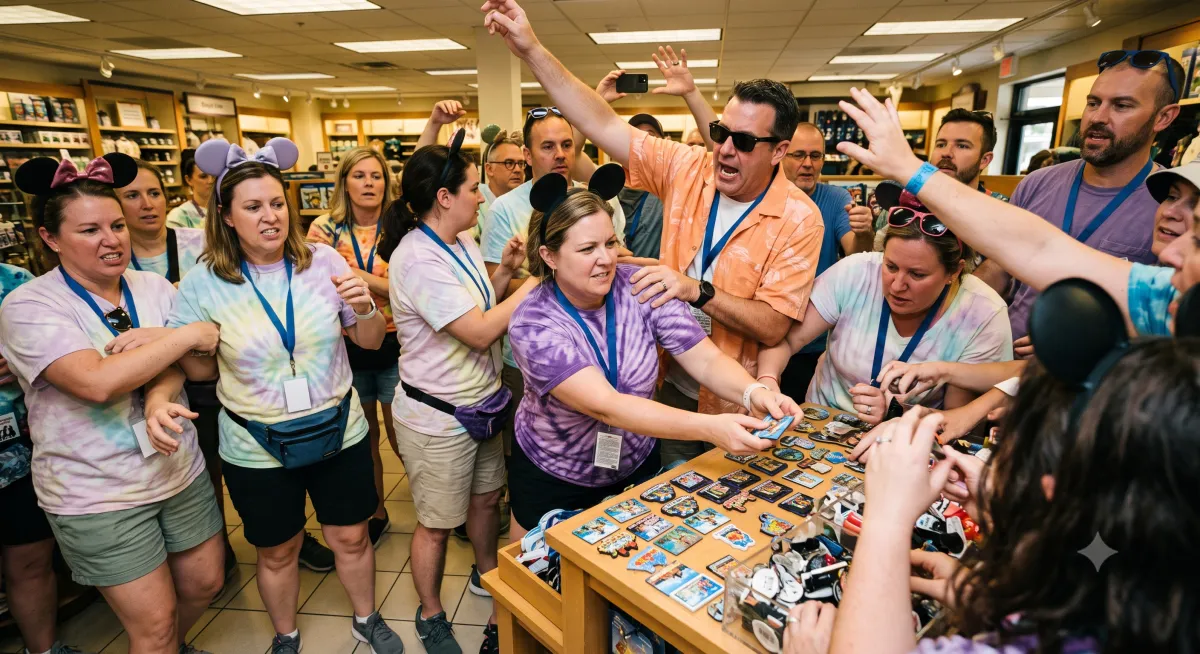
Now here's the part that you need to pay attention to: Disney also releases a limited-run magnet. Free. A piece of tin with Woody and Buzz on it. Available for about three months, only at one gift shop, only if you show up during the window. Miss it, and you're trolling eBay trying to buy back a magnet that cost Disney pennies to make.
Grown adults. Refrigerators. A magnet.
And Passholders are currently asking Disney, politely, to just mail the thing to people who can't make the trip. Not "lower my pass price." Not "give me more rides." Mail me the magnet.
Go ahead and laugh. I did too, the first time I read it. But laugh quietly, because what you just watched is a multi-billion dollar company get a customer to beg for the privilege of paying more, harder, more often, for something that has zero functional value.
That's not just a fanbase, but a religion with a gift shop.
Why Does This Matter
Before you decide this doesn't apply to your law firm or your HVAC company or your wealth management practice, read on...
Disney didn't create customers. It created citizens. There's a difference between someone who buys your service and someone who has built part of their identity around being associated with you. A customer compares your price to the guy down the street. A citizen doesn't compare, they defend.
Most professional service owners are out there competing on price because they never gave anyone a reason to be a citizen. You're selling outcomes, tax savings, clean carpets, a winning case, a healthier portfolio, and outcomes get shopped. Identity doesn't. Nobody shops their tribe.
I'll preemptively crush the objection running through your head right now, because I've heard it a thousand times in mastermind rooms. "Vance, I'm a financial advisor. I'm not Disney. People don't get tattoos of my logo."
You're right. They probably won't. But that's a failure of imagination, not a law of physics. Harley-Davidson owners get the logo tattooed. Peloton owners build their personality around a bike. CrossFit members will talk your ear off about their "box" like it's a fraternity. None of those are theme parks. They're businesses that figured out how to sell belonging instead of just selling the transaction.
How to Use This
I'll give you my own number, because I don't deal in theory I haven't tested on my own businesses.
Across three home service businesses on the Eastern Shore — carpet cleaning, oriental rug washing, mold remediation — I learned a long time ago that the customers who stuck around weren't the ones who got the cheapest price. They were the ones who felt like they were dealing with the place, not a place. The rug washing business is the only one within a hundred miles that hand washes rugs. That single fact, repeated consistently, did more for retention than any discount ever did. People didn't just hire us. They told their neighbors they used "the rug people," like we were the only ones who existed. That's identity-based loyalty on a carpet cleaning budget.
Inside Walt Disney World, I watched this up close running Chef Mickey's at the Contemporary Resort for a decade. Families didn't come back because the pancakes were good. They came back because eating breakfast with Mickey was something they got to be part of, year after year, and they wanted to be the kind of family that did that. The pancakes were a delivery vehicle. The identity was the product.
Strategic Implications
Price resistance usually means identity absence, not value absence. If clients are haggling, they don't yet see themselves as "your people."
Small, limited, slightly irrational tokens of belonging (the magnet, the patch, the sticker) build more loyalty per dollar than any discount you'll ever run.
Scarcity attached to identity works. Scarcity attached to price just trains people to wait for the sale.
A referral isn't generated by satisfaction. It's generated by a client wanting to be seen as the kind of person who uses you.
Recommended Actions If This Were My Business
This week, name what your "citizens" get that a one-time customer doesn't. A private line, a recognition ritual, an insider update, something with zero retail value and total emotional value.
Find the one fact about your business that makes you "the" version, not "a" version, the way the rug washing facility is the only hand-wash within a hundred miles. Say it constantly.
Build one small, slightly irrational token tied to being a long-term client. It does not need a price tag. It needs a feeling attached to it.
Stop measuring loyalty by repeat purchases alone. Start measuring it by how often clients describe themselves using your language ("my guy," "my place," "the only ones I trust with this").
FAQs
What does "identity-based loyalty" mean in business? It means customers stay and refer because using your business says something about who they are, not just because the service works.
How do financial advisors and attorneys reduce client churn using identity instead of price? By creating recognizable rituals, language, and small markers of belonging for long-term clients, so leaving feels like losing status, not just switching vendors.
Why are Disney Adults a useful business example? Because they demonstrate, at scale, that people will pay more, more often, for belonging rather than function, which is the exact mechanism every premium-priced service business needs to replicate.
Conclusion
Mock the magnet all you want. I get the impulse. But the next time a prospect tells you they're "shopping around," ask yourself an uncomfortable question first: have you given them anything to belong to, or just something to buy?
Disney figured out the answer thirty years before you were trying to figure out your pricing page. Build the magnet. Build the tribe. Then watch price stop being the conversation.
You won't profit unless you implement.


