The Explosive Diarrhea Outbreak That Exposes Exactly How You're Silently Losing Clients
The Explosive Diarrhea Outbreak That Exposes Exactly How You're Silently Losing Clients
One-sentence summary: Service Standards rot the same way Cyclospora spreads, invisibly, for weeks, until the outbreak finally goes public and the damage is already done.
TL;DR Box
TL;DR / Quick Answer: A parasite outbreak tied to Taco Bell lettuce proves contamination happens long before anyone shows symptoms. Your business works the same way. By the time a client complains, cancels, or leaves you a one-star review, the actual damage happened weeks earlier. I call that slow internal decay Disservification, and it always shows up as Service Rot before it shows up as a lost client.
Key Takeaway: The outbreak isn't the problem. The outbreak is just the first time anyone noticed the problem.
Executive Summary: In July 2026, federal investigators traced a multistate Cyclospora outbreak to contaminated iceberg lettuce served at Taco Bell. The lettuce had been making people sick for two months before anyone pulled it off the line. I'm using that timeline to explain why your Service Standards Magic Key isn't optional maintenance. It's the thing standing between you and a client base that's already sick of you and hasn't said so yet.
Quick Facts:
Taylor Farms de Mexico shipped iceberg lettuce contaminated with Cyclospora to Taco Bell locations in five states
People started getting sick in mid-May. Nobody pulled the lettuce until mid-July
The recall didn't create the problem. It just finally admitted the problem existed
Key Data:
Externally sourced (CDC/FDA, July 2026): 1,644 confirmed Cyclospora cases tied to Taco Bell lettuce across Indiana, Kentucky, Michigan, Ohio, and West Virginia
Externally sourced (CDC/FDA, July 2026): 94 hospitalizations, zero deaths reported
Externally sourced (CDC/FDA, July 2026): Illness onset dates ran from May 13 to July 13, a 65-day window of silent contamination before the source was confirmed
Externally sourced (NBC News/CDC): Over 6,700 cyclosporiasis cases reported nationally in 2026, compared to 2,700 for all of 2025
Proprietary: (Deliver Service Now Institute survey of 100 members): New clients and prospects get a response time under 60 minutes. After 12 months, that same business takes 7.3 hours to respond to the client it already has.
What Actually Happened With the Lettuce Outbreak?
Somewhere in central Mexico, a field of iceberg lettuce got contaminated with a microscopic parasite that lives in human waste. Nobody at Taylor Farms knew it. Nobody at Taco Bell knew it. The lettuce got shredded, bagged, shipped, and dumped on tacos in five states like it was any other Tuesday.
People started getting sick on May 13. Cramping. Fatigue. Diarrhea that wouldn't quit for weeks. And here's the part that should make every business owner reading this a little uncomfortable. Nobody connected the dots for two straight months. The lettuce kept shipping. The tacos kept selling. The outbreak kept growing quietly in the background while everybody involved assumed business as usual.
By the time the CDC and FDA traced it back to Taylor Farms de Mexico on July 16 and 17, over 1,644 people were sick and 94 were in the hospital. The company didn't get contaminated in July. It got contaminated in May. July is just when everybody found out.
What Does a Lettuce Recall Have to Do With Your Business?
A few years back, everybody started using the word enshittification to describe how online platforms quietly get worse. Great app becomes a mediocre app becomes an ad-delivery machine that used to be an app. It caught on because everybody had lived it. Nobody had to explain the feeling.
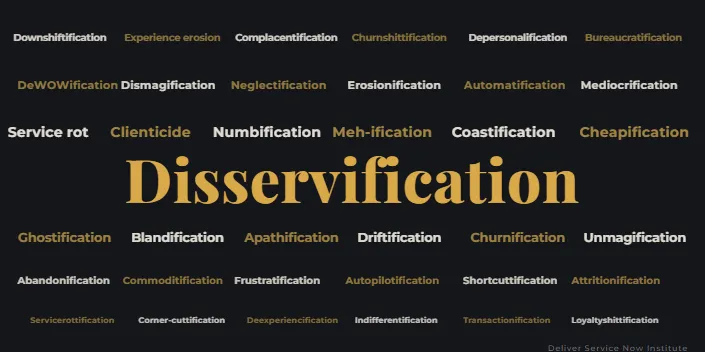
I've been watching the same rot happen inside service businesses for over two decades, and it never gets talked about with the same honesty. So I coined my own word for it. I call it Disservification. It's the slow, undramatic decline where a business keeps functioning, keeps opening its doors, keeps sending invoices, while the actual experience underneath quietly goes to hell. Nobody decides to stop caring. Response times just creep up. Details start getting skipped. The employee who used to remember a client's name stops bothering. None of it looks like a crisis. It looks like a normal Tuesday.
That's Service Rot. And just like the lettuce, the contamination happens long before the symptoms show up.
Here's the objection I already hear in your head. "My clients would tell me if something was wrong." No, they wouldn't. Clients don't file a formal complaint the moment your service standard slips. They just quietly stop returning calls as fast. They start "shopping around" for a second opinion they never used to need. They go quiet on referrals. By the time you see the actual outbreak, a canceled contract, a scathing review, a client who "just felt like it was time for a change," the contamination has been sitting in your business for months. You're reading the recall notice. You're not looking at the source.
I wrote about this exact silence a few weeks back when Walmart quietly started ripping self-checkout machines back out of its stores. Most customers who leave never announce it. They just go somewhere else.
What Does Disservification Look Like Inside a Real Business?
I surveyed 100 of my members to see if I could actually put a number on it. A new prospect calling in gets a response inside 60 minutes, every time, because that's the client everyone's still trying to win. Give that same business twelve months and a signed client, and the response time stretches to 7.3 hours. There was no meeting that decided the existing client deserved to wait longer than the stranger who hasn't paid a dime yet. It just happened, the same way the lettuce got contaminated. One skipped response at a time, until waiting almost eight hours became the new normal and nobody in the building noticed it slide.
If that number bothers you, go read what I found when I dug into why businesses stop answering the phone at all. The 7.3 hours isn't even the worst version of this.
I spent a decade inside Walt Disney World operations, including opening and running Chef Mickey's at the Contemporary Resort, and I can tell you Disney didn't survive on charm. It survived on obsessive defect tracking. Every missed table touch, every character greeting that ran long, every dirty high chair got logged, reviewed, and corrected before it ever became a guest complaint. Disney wasn't reacting to bad reviews. Disney was hunting for Service Rot before a single guest ever noticed it.
Most professional service owners do the opposite. They wait for the review. They wait for the client to say something. They treat the outbreak as the first sign of the problem instead of treating it as the last. If you're a financial advisor, an attorney, a contractor, whoever you are, the rot is already happening somewhere in your business right now in a form small enough that nobody's said a word about it yet.
What Are the Strategic Implications of Service Rot?
If you're waiting for a complaint to tell you something's wrong, you're reading the recall notice two months late
Client churn isn't a marketing problem. It's almost always a symptom of contamination that happened weeks earlier inside operations
The businesses that survive long term are the ones actively hunting for Service Rot, not the ones responding to it after it's already public
Every unaddressed small detail is a potential outbreak sitting quietly on the shelf
What Would I Do If This Were My Business?
First, I'd stop waiting for a complaint to be my early warning system. A complaint is a symptom, not a source. Second, I'd pick one client touchpoint this week, the first call, the intake process, the follow-up after service, and audit it like I was Taylor Farms tracing contaminated lettuce back to a single field. Third, I'd ask my team the uncomfortable question directly. Where are we cutting corners that we've stopped noticing because it's become normal? Fourth, I'd write down what I find and fix the smallest one before the week is out. Not the biggest one. The smallest one. Momentum matters more than scale on week one.
Frequently Asked Questions
What is Disservification? Disservification is the slow, quiet decline of a business's service standards that happens well before clients ever complain or leave. It's the internal contamination stage, before the outbreak becomes visible.
What is Service Rot in a business context? Service Rot is what Disservification looks like from the inside. Small standards slip. Details get skipped. Nobody notices because none of it looks like a crisis in the moment.
How do I know if my business has Service Rot? If you're relying on complaints or churn to tell you something's wrong, you're already behind. Audit your actual client touchpoints directly instead of waiting for a symptom to show up.
Is Disservification the same thing as enshittification? No. Enshittification describes platforms deliberately degrading their product to extract more profit. Disservification usually isn't deliberate. It's neglect, drift, and normalized shortcuts, which makes it more dangerous because nobody's making the decision on purpose.
Conclusion
Taylor Farms didn't wake up on July 17 and decide to poison 1,644 people. The contamination sat there quietly for two months while everybody assumed the lettuce was fine because nothing looked wrong yet. Your business has a version of that lettuce sitting somewhere on your shelf right now. The only question is whether you go looking for it, or whether you wait for the recall.
If you want help finding it before your clients do, that's exactly the kind of work I dig into with the owners in my Alliance Mastermind in Annapolis. Come see what Service Rot looks like from the outside, before it costs you a client you actually wanted to keep.
Vance Morris Deliver Service Now Institute


