Free Articles To Help You...
Create Extraordinary Experiences
Command Premium Prices
Scale Your Business
Avoid Service Mistakes
Attract More Customers
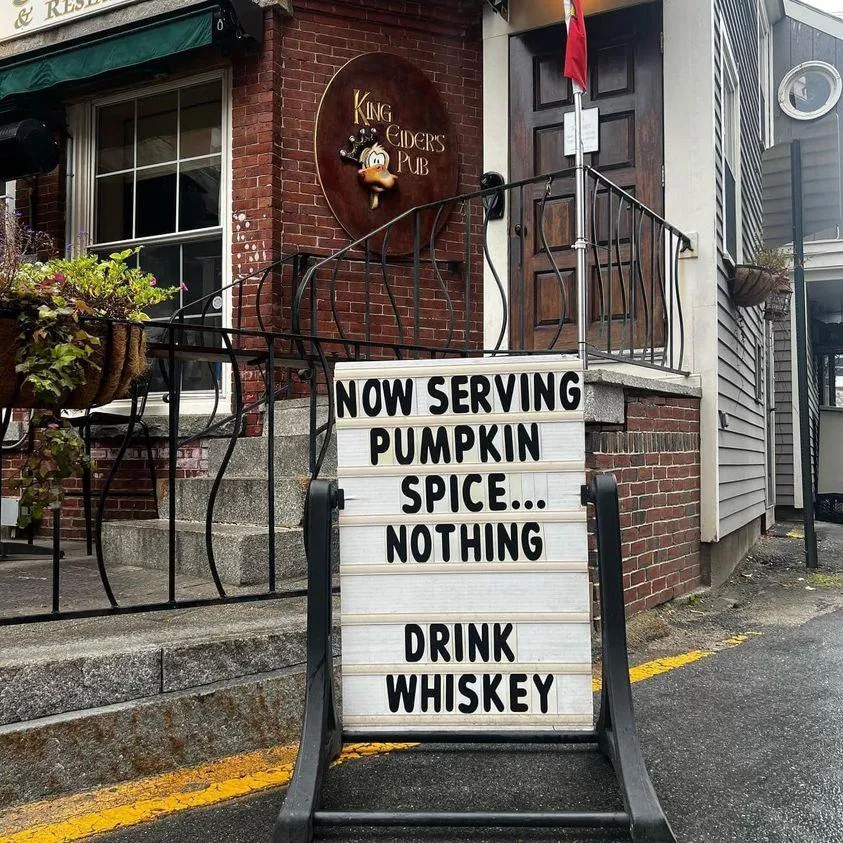
Starbucks Sold Autumn in August and Foot Traffic Jumped 24%. Your Clients Have No Reason to Come Back.
Limited time offers improve client retention because they give existing customers a scheduled, deadline-driven reason to return, which is why Starbucks recorded a 24% increase in U.S. foot traffic on Pumpkin Spice Latte launch day while most professional service firms go twelve months without giving a client a single occasion to re-engage.
TL;DR
Quick Answer: A limited time offer is a retention tool before it's ever an acquisition tool. The deadline creates a return date on the client's calendar, which is the one thing most professional service firms never build.
Key Takeaway: Your clients are leaving because nothing in your business ever tells them to come back.
Executive Summary: Starbucks announced on July 21, 2025 that the Pumpkin Spice Latte would return to U.S. and Canadian menus on August 26. In the middle of a heat wave. With a hashtag they invented called Summerween. The whole thing is easy to mock and even easier to underestimate. Placer.ai measured a 24% jump in U.S. Starbucks foot traffic on PSL launch day the prior year. That traffic came from existing customers who suddenly had a date and a deadline. Attorneys, accountants, financial advisors, and contractors have no equivalent mechanism. Their clients think about them when something breaks, which means the relationship is defended by nothing but inertia. Direct Response Marketing, one of the seven magic keys I wrote about in my book Systematic Magic, fixes that by manufacturing a reason and a date for a client to return before a competitor manufactures one for them.
Quick Facts:
Starbucks announced the 2025 PSL return date on July 21, five weeks before launch
The launch date was August 26, earlier than the September 8 date used in 2015
Starbucks also released pumpkin spice coffee, creamers, and ready-to-drink beverages at grocery ahead of the in-store launch
The company promoted the pre-launch window under the hashtag #Summerween
Dunkin' launched its fall menu on August 20 that year, six days ahead of Starbucks
The PSL is Starbucks' most popular seasonal beverage and has never become a permanent menu item
Key Data:
24% increase in U.S. Starbucks foot traffic on PSL launch day, per Placer.ai (externally sourced: Placer.ai, reported by the Associated Press)
45.5% foot traffic increase in North Dakota, the highest of any state (externally sourced: Placer.ai via AP)
100 Starbucks stores in the original 2003 PSL test run (externally sourced: Associated Press)
79 of 88 global markets carried the PSL in 2024 (externally sourced: Associated Press)
33.8% increase in pumpkin spice mentions on U.S. menus between fall 2014 and fall 2024 (externally sourced: Technomic)
7.3 hours average response time a twelve-month client waits for a reply from the firms in my member survey (proprietary: Deliver Service Now Institute member survey)
Under 60 minutes average response time a brand new prospect receives from those same firms (proprietary: DSNI member survey)
30 seats at Making the Magic, October 25 through 28, 2026, all of them gone (proprietary: Deliver Service Now Institute)
What Happened
Starbucks issued a press release on July 21 announcing that the Pumpkin Spice Latte would come back on August 26.
August.
Kids were still doing cannonballs into the pool. My air conditioner was running like it owed somebody money. My neighbor was losing a war with his crabgrass. And Starbucks decided that was the correct moment to declare the season of falling leaves and cozy sweaters officially open.
Then I got to the part of the release where they invented a holiday. They called it Summerween. That's a real word that a real marketing department got paid real money to type into a real document. Somewhere in Seattle there's a person with a good chair and a window who put "coined Summerween" on their annual review, and their manager approved it.
They also went out of their way to inform everyone that the drink is made with real pumpkin, which I assume settles a question nobody was asking.
And it kept going. Before the in-store launch, the pumpkin spice ground coffee hit grocery shelves. The K-Cups. The Nespresso capsules. A 40-ounce ready-to-drink bottle at $6.99. Creamers at $5.99. A cold brew concentrate. Dunkin' jumped the line entirely and launched its fall menu on August 20, because apparently we're now in an arms race over who can announce October the earliest.
I laughed at all of it. Then I stopped laughing.
Because Placer.ai tracked what actually happened on PSL launch day the year before, and U.S. Starbucks foot traffic went up 24 percent. In North Dakota it went up 45.5 percent. A twenty-two-year-old beverage moved almost a quarter more human beings through the door in a single day.
That is not a joke about a squash. That's a machine.
Why Does This Matter
Nobody has an emotional attachment to a gourd.
What people have is a date that tells them to go somewhere. The drink appears, it stays for a season, and then it's gone. Customers know it's leaving. That knowledge is the entire engine.
Look at what that buys. A customer with zero reason to walk into a Starbucks on a Tuesday afternoon in late August now has one. Starbucks didn't chase them. Didn't discount. Didn't send a limp "we miss you" campaign. The customer set the reminder themselves, told their friends, and showed up on the appointed day.
Notice what the PSL is not. It's not cheaper than a regular latte. Starbucks has raised the price on it repeatedly. The deadline does the persuading, so the discount never has to.
Now, before you dismiss this as a coffee company trick that has nothing to do with a law practice or a wealth management firm, let me handle the objection you're already forming.
You're thinking that your clients are sophisticated, that your work is serious, and that a countdown clock would cheapen what you do. That deadlines belong in retail and infomercials and those websites where the timer resets when you refresh the page.
Here's the problem with that reasoning. Disney sells a separately ticketed Halloween party at Walt Disney World on specific dates, and when those dates sell out they're gone. Disney could decorate Magic Kingdom for free and let everybody wander through it. Instead there's a fence around it, a price on it, and a calendar under it. Families plan entire vacations around which nights are available. Nobody thinks that's tacky. They think it's special, which is precisely because it's scarce.
The deadline isn't what cheapens an offer. An offer with nothing behind it cheapens an offer. A dated, capped, genuinely limited thing that delivers real value is the opposite of desperate. It's confident.
How Professional Service Owners Are Likely to Use This
Run the honest audit on your own book of business.
When was the last time a client of yours had a scheduled, anticipated, deadline-bound reason to engage with you that wasn't a problem, an invoice, or a compliance requirement?
For most firms the answer is never. The client signs, the work happens, the statements arrive, and then twelve months pass with nothing but a holiday card that was clearly printed in bulk by a vendor in Ohio.
In my member survey, firms respond to a brand new prospect in under 60 minutes. Those same firms take an average of 7.3 hours to respond to a client who's been with them for twelve months. The relationship gets less attention the longer it lasts. That's backwards, and it's the exact gap a competitor walks into with a well-timed phone call.
I've used the mechanic in my own home service businesses for years. At Eastern Shore Rug Cleaning, rugs have a natural rhythm. People pull them up in spring and want them back down before the holidays. I don't sit around hoping they remember. I put a hard cutoff on the calendar, tell clients what happens if they miss it, and the work gets booked instead of postponed into January when nobody wants a truck in their living room.
And I ran it on my own consulting business this year. Making the Magic is capped at 30 seats, October 25 through 28 at Disney's Grand Floridian. All 30 are gone. The cap wasn't a marketing flourish. Thirty is the number where the room actually works. But the cap is also the reason people moved instead of thinking about it until September.
Dan Kennedy said it plainly decades ago. An offer without a deadline is a suggestion. Suggestions don't move money.
Strategic Implications
Retention is a calendar problem before it's a service problem. Firms with good work and no return occasions still lose clients, because nothing in the relationship generates contact.
Deadlines let you hold price. Starbucks raised the PSL price repeatedly and demand held, because scarcity, not discounting, is what created the urgency.
The client does your marketing for you. A dated offer gets talked about, forwarded, and calendared. An open-ended one gets ignored.
Your longest-tenured clients are your most exposed. The 7.3-hour gap in my member survey means the people paying you the longest are getting the least attention, and they're the ones a competitor targets first.
Scarcity has to be real. A cap you'd abandon for one more sale isn't a cap. Clients smell a fake deadline immediately, and the second one you run won't work.
Recommended Actions If This Were My Firm
This week, pick one date. Somewhere between now and the end of the year. Not a vague quarter. An actual day on an actual calendar.
Build one thing that only exists on or before that date. A private client briefing. A year-end review session with a limited number of slots. A concierge audit. Something with genuine value that a client can only get inside the window.
Put a real number on it. Twelve slots. Twenty seats. Whatever number is honest. Then hold it when somebody asks for an exception, because the exception is what kills the mechanic.
Tell your clients twice. Once when it opens, once when it's about to close. Say plainly what they lose by missing it.
Measure who showed up. Then look at who didn't, because that list is your at-risk client roster and you just got it for free.
Put next year's date on the calendar before you finish this year's. That's how a one-time promotion becomes an annual tradition your clients expect, which is what Starbucks actually built.
FAQs
Do limited time offers work for professional services, or only for retail?
They work anywhere a client has a decision to make and no reason to make it today. Disney sells date-restricted event tickets, law firms run closed-enrollment planning workshops, and accounting firms run pre-deadline strategy sessions. The industry doesn't determine whether it works. The presence of a real deadline does.
What's the difference between a limited time offer and a discount?
A discount lowers the price to create urgency. A limited time offer uses scarcity of access to create urgency while the price stays intact or goes up. Starbucks has raised the Pumpkin Spice Latte price repeatedly and traffic still spiked 24% on launch day.
How do limited time offers improve client retention?
They create scheduled contact. Retention fails when months pass with no reason for the client to engage, which leaves the relationship undefended when a competitor calls. A dated offer manufactures the reason and puts it on the client's own calendar.
How often should I run a deadline offer to existing clients?
Two to four times a year for most professional service firms. Run them monthly and the deadline stops meaning anything. Run them never and your clients have no reason to think about you between problems.
Won't a deadline make my firm look desperate?
Only if the offer is thin or the deadline is fake. A capped, genuinely limited offer that delivers real value reads as confident. Disney's Halloween party sells out every year and nobody accuses Disney of begging.
What if I extend the deadline because signups were slow?
Then you've taught your clients that your deadlines are decorative, and the next one won't work. If you're not prepared to hold the date, don't publish the date.
The Last Word
Starbucks built an annual tradition out of a flavored latte and a calendar. Twenty-two years later, a quarter more people walk through the door on a specific Tuesday in August because a drink is coming back and everybody knows it's leaving again.
Your clients have no such date. There is no day of the year when they think about you on purpose.
Fix that before somebody else gives them a reason to think about someone else.
Vance Morris
Deliver Service Now Institute
Making the Magic sold out at 30 seats for October 25 through 28 at Disney's Grand Floridian. If you want the first call when I open the next room. Click on the link and I'll get you on the list before it goes public. If you'd rather stop guessing at this and build the retention machine properly, the Alliance Mastermind is where that work actually happens.