Free Articles To Help You...
Create Extraordinary Experiences
Command Premium Prices
Scale Your Business
Avoid Service Mistakes
Attract More Customers
Employee Onboarding Customer Retention
88% of Your New Hires Feel Let Down Before Their First Week Is Over — And Your Clients Are Paying For It
Why does poor employee onboarding hurt client retention in professional service businesses?
Magic Key: Employee Magic (QEE — Quality Employee Experience)
Published: June 8, 2026
TL;DR / Quick Answer
Most professional service businesses are hemorrhaging clients because of a problem that starts on day one of employment, not during the client relationship. The 2026 Qualtrics Employee Experience Trends Report found that 88% of new hires feel their company failed to bring them on board properly. Those same people are the ones answering your phones and greeting your clients. Fix the first 90 days of the employee experience and you stop the client leak at the source.
Key Takeaway
A broken onboarding experience doesn't just create turnover. It creates client-facing employees who are already disengaged before a single client interaction happens. Quality Employee Experience (QEE) is the first variable in the Client Retention formula for a reason, you can't build a loyal client base on a foundation of employees who felt like an afterthought.
Executive Summary
The Qualtrics 2026 Employee Experience Trends Report studied employees across 24 countries and every major industry. What it found should stop every business owner cold. New hires now describe their onboarding as one of the most underwhelming experiences of their working lives. Only 44% plan to stay longer than three years. Only 12% say their company did a great job bringing them on board. The frontline people your clients interact with every day are also your least invested-in people. Walt Disney understood this 70 years ago and built an empire on fixing it. The formula hasn't changed.
Quick Facts
88% of new hires do not feel their company handled onboarding well
Only 44% of new hires intend to stay longer than three years
63% of frontline workers have never received feedback that improved their performance
50% of frontline workers say they can't challenge the traditional way things are done
Strong onboarding programs improve new hire retention by as much as 82%
Strong onboarding programs improve new hire productivity by more than 70%
Key Data
12% — new hires who feel their company did a great job onboarding them
88% — new hires who don't
44% — new hires who plan to stay more than three years
24 countries represented in the 2026 Qualtrics Employee Experience Trends Report
82% — potential improvement in retention from strong onboarding
70% — potential improvement in productivity from strong onboarding
What Happened
The Qualtrics 2026 Employee Experience Trends Report landed recently and one number in it I haven't been able to shake. Only 12% of employees feel their company did a great job bringing them on board. That means 88 out of every 100 people you hire walk through your door on day one already disappointed.
They came in hopeful. They needed to believe they made the right choice. And before they've found the breakroom, you've already let them down.
The report went further. The new hire honeymoon period isn't just over. In larger organizations, researchers described it as "downright bitter." Only 44% of new hires plan to stay longer than three years. And the disruption that most destabilizes new employees isn't technology or market shifts. It's organizational chaos — layoffs, leadership churn, restructuring. Which means in the exact environment most businesses are operating in right now, new people are arriving at their most anxious and being greeted by their most underwhelming experience.
Why Does This Matter
Because those people aren't just employees. They're the first impression your clients get of your business.
Sixty-three percent of frontline workers report they've never received feedback that actually improves their performance. Half say they can't challenge the way things have always been done. These are the people your clients interact with every single day.
The Qualtrics report states it plainly: when employee experience is poor, client experience suffers. They're not separate tracks. They never were.
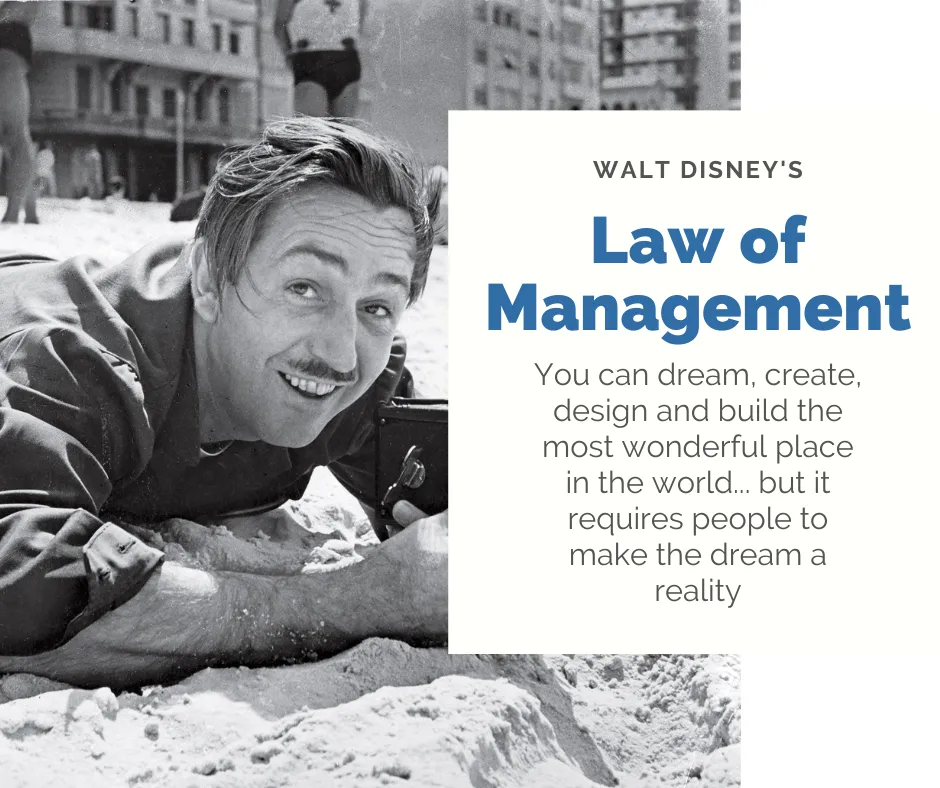
Walt Disney grasped this before most of us were born. He didn't call his park employees workers or staff. He called them cast members. Still does. That wasn't cute branding. It fundamentally changed how people understood their role. They weren't checking tickets or operating rides. They were performing. Creating an experience. Carrying the story forward.
There's a famous story about Walt walking through one of his studios and stopping to chat with a janitor who was sweeping up. He asked the man what he did at Disney. The janitor didn't say "I sweep floors." He said, "I help create magical experiences for families."
That janitor understood his role more clearly than most executives understand theirs. And Walt put that understanding into him deliberately, through the way Disney brought people onto the team.
How Are Professional Service Owners Likely to Use This
Most professional service owners will read the retention statistics and immediately think about their marketing. That's the wrong move. The leak is upstream. The client who felt the flat greeting, the rushed intake, the follow-up that never came is a QEE problem.
The owners who move on this will audit the first 90 days of every new team member's experience and rebuild it around one question: does this person leave day one more certain and more excited than when they arrived?
The ones who don't will keep spending money on client acquisition to replace the clients walking out quietly from the back.
Strategic Implications
Onboarding is the first chapter of the employee relationship. First impressions compound — a bad one on day one costs you for months.
The cost of broken onboarding isn't just turnover. It's every fractured client moment that happened while that disengaged person was still on your payroll.
You can't buy your way out of this with better marketing. You have to build your way out with better systems.
The businesses that treat every team member as a cast member — someone who understands exactly what experience they're responsible for creating — are the ones whose clients refer without being asked.
QEE is the first variable in the formula [QEE + QCE + QBP] x DRM = CR for a reason. It all starts here.
Recommended Actions If This Were My Business
This week: Pull up everything you currently do for a new team member in their first seven days. Be ruthlessly honest. If it's mostly administrative, you've found your first QEE violation. Write down what it would look like if that first day left someone more excited than when they walked in.
Week two: Define what "cast member" means in your business. What experience are your team members actually responsible for creating? Write that down in one sentence and share it with every person on your team.
Week three: Build a 90-day check-in rhythm. Not performance reviews. Conversations. How is the person experiencing the business? What's working? What's confusing? Where do they see themselves growing? This is how you convert a new hire into a long-term contributor.
Week four: Look at your offboarding data. Every person who left in the last 12 months — when did they emotionally check out? My bet is it was in the first 90 days, long before they handed in a notice.
Month two: Steal from Disney. Implement what I call the "plussing" culture in your team huddles. Instead of tearing down ideas, build on them. "How do we make this even better?" beats "that won't work" every single time. Mary Blair's concept art for It's a Small World was unconventional enough that most studios would have killed it. Walt said make the colors even more vibrant. That painting still runs 24 hours a day.
Month three: Measure it. Track retention at the 90-day mark. Track it at 12 months. Strong onboarding programs have been shown to improve retention by up to 82% and productivity by over 70%. If you put real systems in place, you'll see it in those numbers.
FAQs
Why does onboarding affect client retention in professional services?
Because your team members are the experience your clients actually have. When someone joins your business feeling like an afterthought, they bring that energy to every client interaction. The 2026 Qualtrics data confirms it directly: poor employee experience produces poor client experience. The two aren't separate problems.
What does a strong onboarding experience actually look like for a small professional service firm?
It starts before day one. The moment someone accepts your offer, they should be hearing from you, connecting with the culture, understanding what standards look like. Day one isn't about covering required topics, it's about leaving that person more certain and more excited than when they arrived. And the first 90 days should include regular, structured conversations about how the new team member is experiencing the business, not performance reviews.
How did Disney approach employee onboarding and what can I learn from it?
Disney ran a two-day new hire orientation called Traditions before any cast member was permitted to interact with a guest. The stated purpose: "We don't put people in Disney. We put Disney in people." The goal was never to get someone to a workstation. It was to make sure they understood exactly what they were there to do, why it mattered, and what the standards were. For your business, that means defining the experience your team is responsible for creating and making sure every new person understands it before they touch a client.
What is QEE in the Systematic Magic framework?
QEE stands for Quality Employee Experience. It's the first variable in the Client Retention formula: [QEE + QCE + QBP] x DRM = CR. Quality Employee Experience, Quality Client Experience, and Quality Business Practices, multiplied by Direct Response Marketing, equals Client Retention. QEE is first because everything downstream depends on it.
How long does it take to see results from better onboarding?
Research shows strong onboarding programs improve 90-day retention measurably and productivity by more than 70% over time. In my own home service businesses, the shift happened faster than I expected once we stopped treating onboarding as paperwork and started treating it as the first chapter of someone's experience with our team. The metric that moved first it was client feedback, not retention.
What's the biggest onboarding mistake professional service owners make?
Confusing administration with orientation. Paperwork isn't onboarding. Compliance training isn't onboarding. Onboarding is the deliberate, intentional process of making a new team member feel that they made the right choice and making sure they understand exactly what experience they're responsible for creating for your clients. Most businesses do the first thing. Very few do the second.
Conclusion
The Qualtrics data is stark. Twelve percent of your new hires feel well-onboarded. Eighty-eight percent don't. And the ones who don't are the same people standing between your clients and the experience you've worked to build.
This is a systems problem. And systems are fixable.
Walt Disney built a two-day orientation before a single cast member touched a guest. He walked his studios and talked to janitors. He renamed his employees because he understood that what you call someone shapes how they understand their role. He built a culture where ideas got plussed, not killed. And he did all of it because he knew that the experience his guests had was built entirely by the people he hired and that those people needed to feel the weight and the pride of that responsibility before they ever walked onstage.
You've got the same formula available to you. [QEE + QCE + QBP] x DRM = CR.
Start with the QEE. Fix the first 90 days. The rest gets easier from there.
Ready to build a complete Quality Employee Experience system for your business? That's exactly what we do inside Systematic Magic. Start at VanceMorris.com.
About the Author
Vance Morris is the only Disney-trained small business consultant on the planet.
He spent a decade as a resort leader at Walt Disney World, where his crowning achievement was designing, opening, and operating Chef Mickey's at the Contemporary Resort — Disney's flagship character dining experience, which became the number one rated character dining destination in the entire Walt Disney Company during his tenure.
After leaving Disney, Vance took those same systems into the real world. He's owned and operated three home service businesses on Maryland's Eastern Shore for nearly 20 years; carpet cleaning, oriental rug washing, and mold remediation businesses now run by a GM while Vance spends 90 minutes a week on all three combined. That's what happens when you actually build the systems instead of just talking about them.
He is the founder of the Deliver Service Now Institute and the creator of Systematic Magic, the only client experience and retention framework built on the operational backbone of the Walt Disney Company and the direct response marketing principles of the world's top marketers.
Vance has shared the stage with Daymond John, Dan Kennedy, Joe Polish, Dean Jackson, Lou Ferrigno, Lee Cockerell, and Meg Crofton, among others. He speaks annually at Daymond John's mastermind and has been recognized as Marketer of the Year and a two-time finalist for Dan Kennedy's Diamond Marketer of the Year award.
He advises professional service firms financial advisors, attorneys, consultants, and contractors — on how to build the kind of client experience that commands premium fees, eliminates price resistance, and produces retention numbers their competitors can't explain.
Connect with Vance at VanceMorris.com or reach him directly at [email protected].
P.S. A word of warning.
The internet is lousy with Disney "experts." Consultants who've taken a tour, read a book, maybe honeymooned at the Grand Floridian, and now sell pixie dust philosophy at premium consulting rates. They'll talk about cast members and Imagineering and the four keys of service with great confidence and zero operational scar tissue. They've never hired a cast member. Never fired one. Never stood in a pre-shift meeting at 6 AM trying to get 40 people aligned before the gates opened. Never had a VP walk through their restaurant unannounced while 300 guests were waiting.
I have.
There is exactly one person on this planet who spent a decade inside Walt Disney World operations, designed and opened a flagship Disney dining experience, then took those same systems into his own businesses and actually ran them — not consulted on them from a safe distance, but owned them, made payroll on them, and built them to run without him.
That person is me.
When you're evaluating who to trust with your client experience and your retention, ask one question: did they actually work there? If the answer is anything other than a straight yes with a job title and a specific property attached to it, you're talking to a tourist. And tourists make lousy guides.